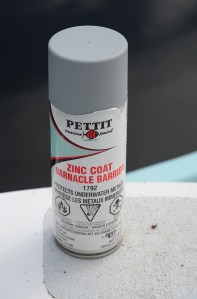
Applied as a spray, Pettit claims Zinc Coat Barnacle Barrier will protect propellers from barnacle build-up.
I still haven’t figured out why the bronze propeller on my boat is the first thing to become encrusted with barnacles after a haul-out. After all, the main constituent of bronze is copper, and my Pettit Horizons antifouling is loaded with copper and it does its job very well elsewhere. But propellers are generally left bare, probably because modern ablative coatings wouldn’t last long due to the high velocity flow across the spinning blades.
Strictly speaking, my prop is probably a manganese bronze which really makes it a brass. Are you confused yet? Well, a brass is an alloy primarily between copper and zinc, typically with 60% copper. True bronzes are usually an alloy of copper with silicon or (now less common) tin. Brass is an inexpensive alloy and very easy to cast into intricate shapes. Unfortunately in a marine environment brass is very susceptible to corrosion and that’s one reason why a small amount of manganese is added. The zinc and copper are not a homogenous mix. Zinc rich areas are electropositive relative to the copper rich areas and consequently zinc dissolves from the surface by electrolysis in the zinc rich areas.
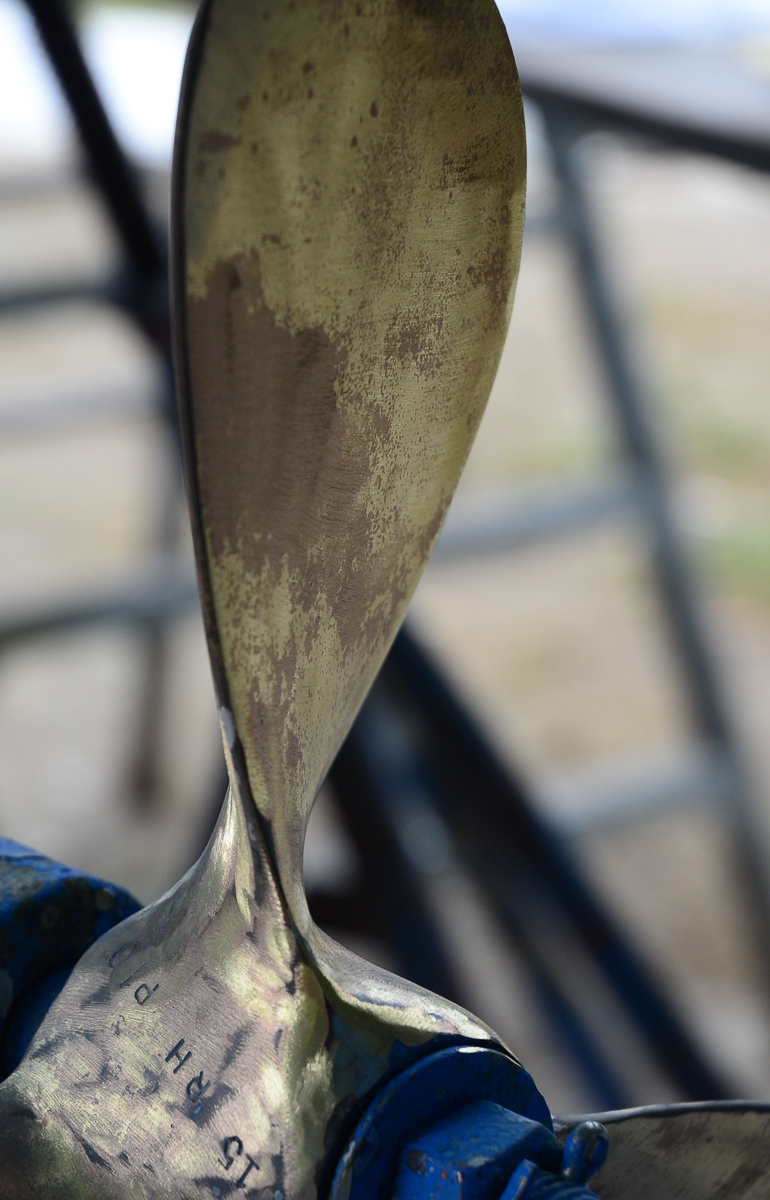
If your freshly polished propeller has a blotchy pink appearance than it is likely to have already suffered some “dezincification.” Some of the zinc has gone leaving a weak, spongy copper rich areas. This can eventually lead to structural failure. That’s why propellers should have some form of galvanic protection, typically in the form of a zinc anode attached to the shaft.
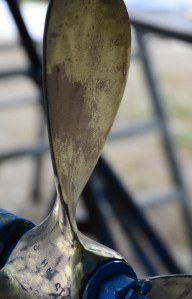
Rainbird’s propeller shows signs of dezincification.
In spite of these areas being copper rich, they are still prone to marine fouling, which is perplexing. Perhaps copper in antifouling is just more readily available to prevent fouling.
I normally polish the propeller with a fine abrasive and leave it untreated. At a recent haul-out, the boat yard suggested that I try Pettit’s Zinc Coat Barnacle Barrier to prevent barnacles growing on my propeller. This comes in a spray bomb and the instructions recommend 3 coats applied one hour apart. This is easy enough. So why would zinc work as an antifouling? The zinc in my prop obviously doesn’t do the job so why should I expect this to work? Once again, maybe it’s availability, and as the yard pointed out, when was the last time I had seen fouling on a zinc anode?
Time will tell if this is an effective solution and I’ll keep you posted.
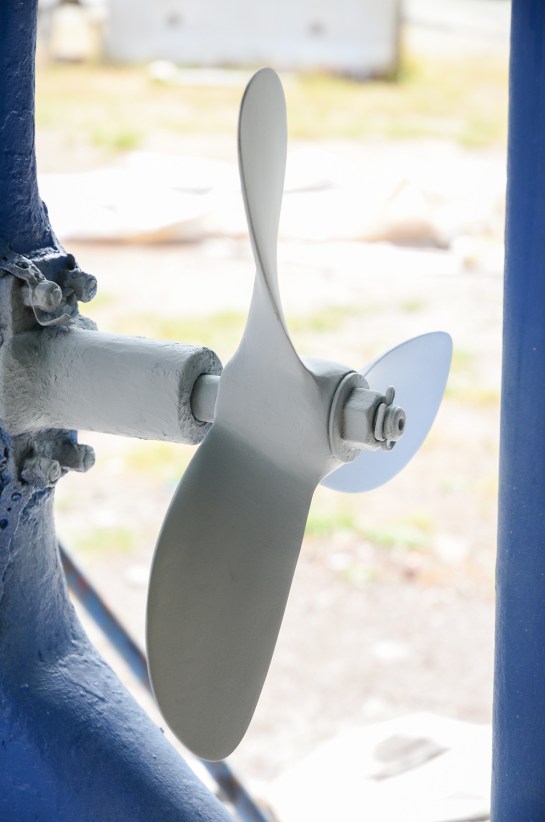
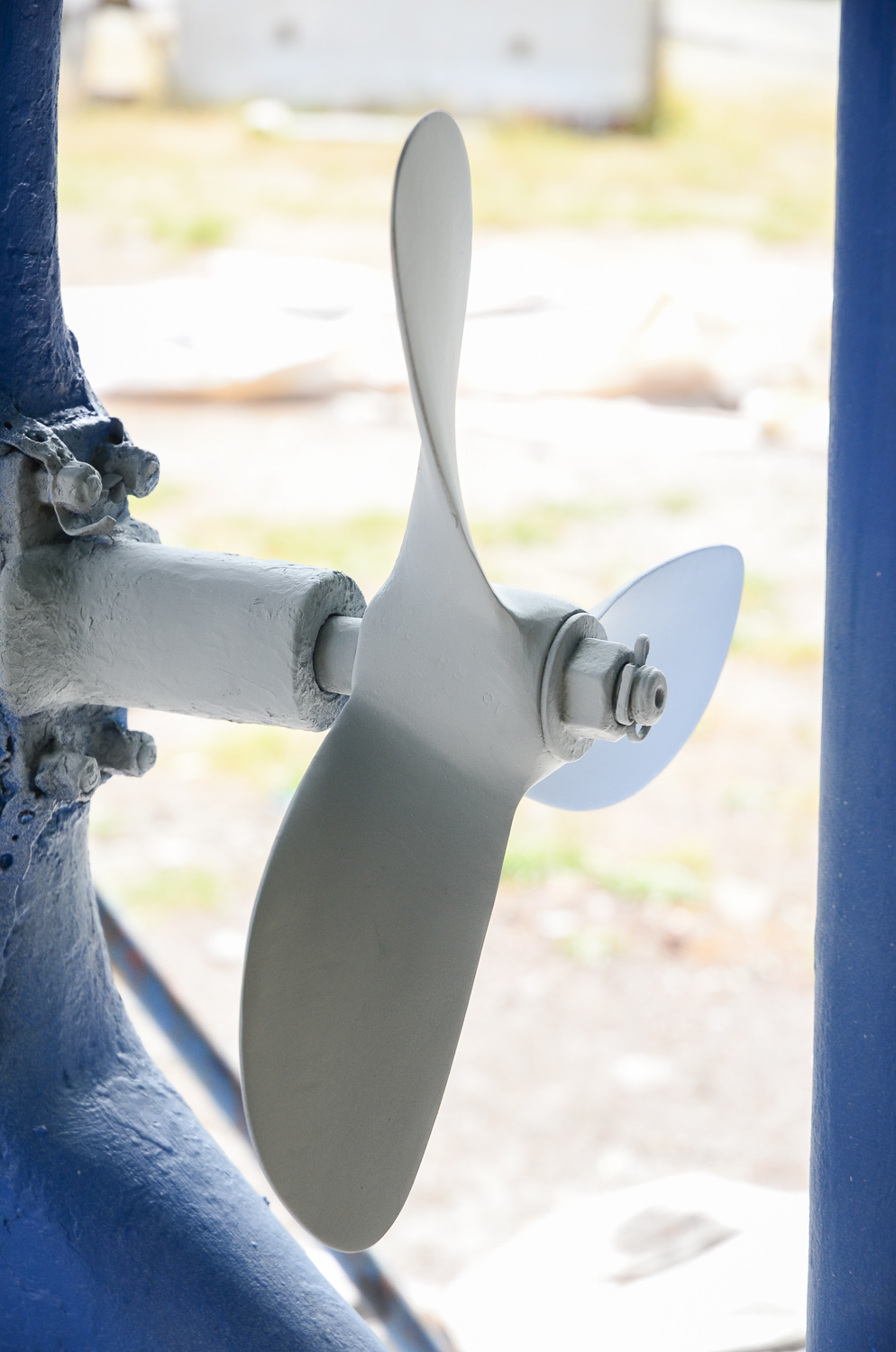
Ready for launch; Rainbird’s propeller after three coats of Zinc Coat Barnacle Barrier.



 Pacific Wooden Boats