Archive

Tag Archives: wooden boats

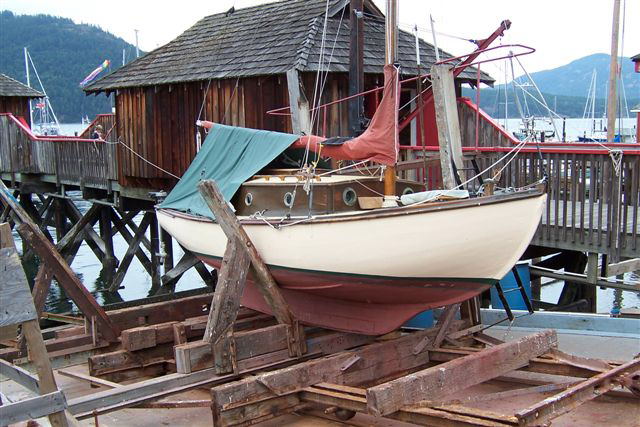
A member's boat is hauled out on the Maritime Centre's ways last year; rebuilding the ways is our major project for 2012.

Our Heritage Ways Are Important For Members And The Local Community

The Covey Marine Heritage Ways is an authentic piece of Cowichan Bay history. Originally built and operated by Ron Lindsay, owner of Covey Marine, these ways are of the traditional railway type design and one of five that operated in Cowichan Bay for many years.

Ron generously donated the ways to the Cowichan Bay Maritime Centre in 2006 and we took on the task of relocating them to our site as part of our interpretive displays. During the move they were brought up to modern environmental standards.

Six years later, after hauling many boats, the ravages of salt water has taken its toll and the complete refurbishment of the carriage is now required. This has also created an opportunity to further improve the ways by increasing its capacity for hauling larger boats. New maintenance services will also be available, including scrubbing, antifouling, zinc replacement plus mechanical and hull repairs.

The ways has become a valuable asset for the Maritime Centre, generating income and providing an important service for boat-owning members. The ways are also important to the local community, bringing in business to stores and restuarants nearby. The cost of the rebuild has been estimated at $25,000 and we are launching a fund raising campaign to achieve that target. If you can help please contact Suzan at cwbs@classicboats.org

Maritime Centre ways operator Lance Underwood has undertaken the task of rebuilding the carriage and with the help of Centre volunteers, the ways should reopen in the early spring.
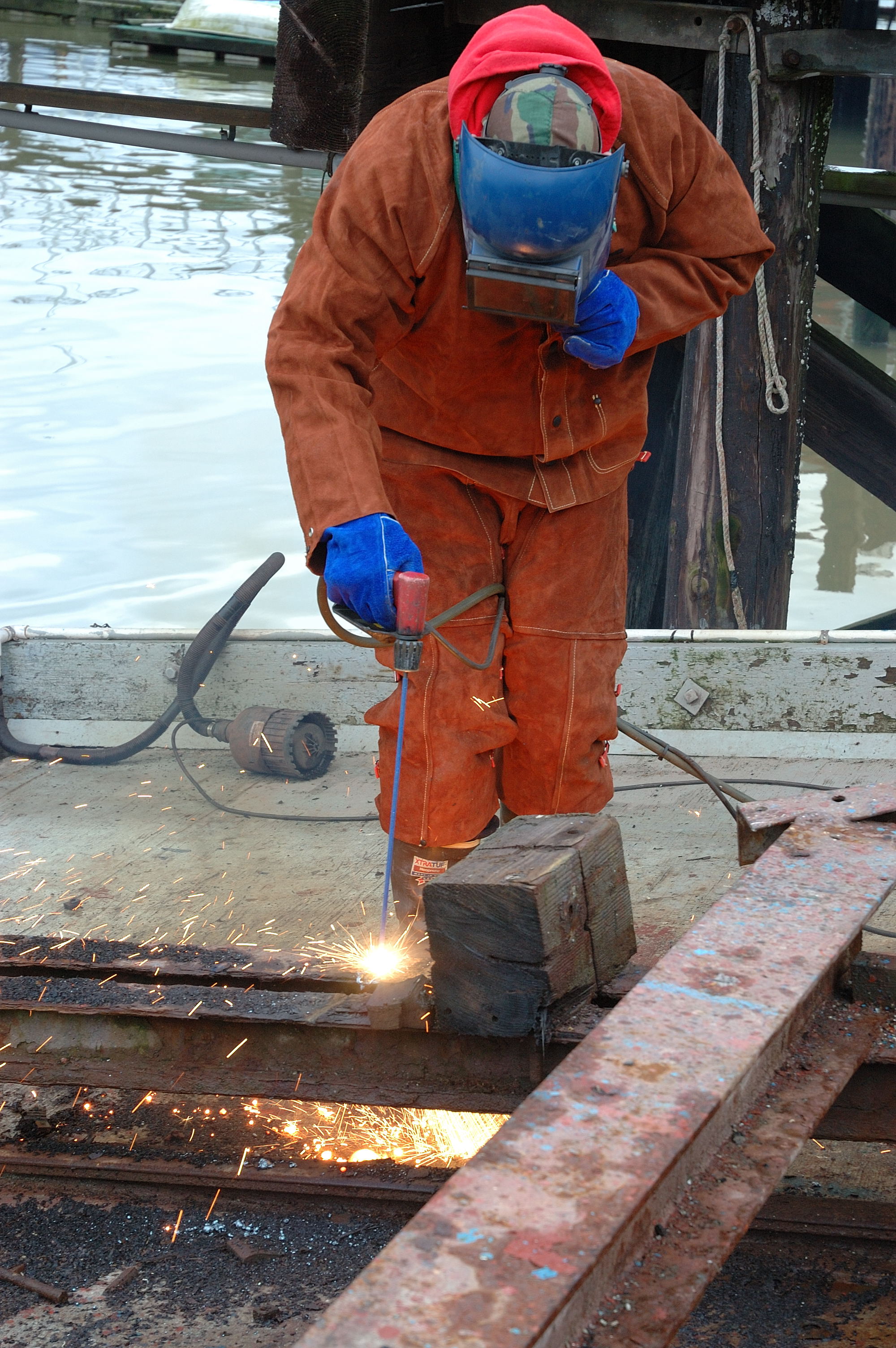
Ways operator Lance Underwood cuts up the badly corroded steel carriage of the old ways.
  • Beginner’s Course Ends But Work Continues On The Bolger Designed Goucester Light Dory

  • By David Skelhon
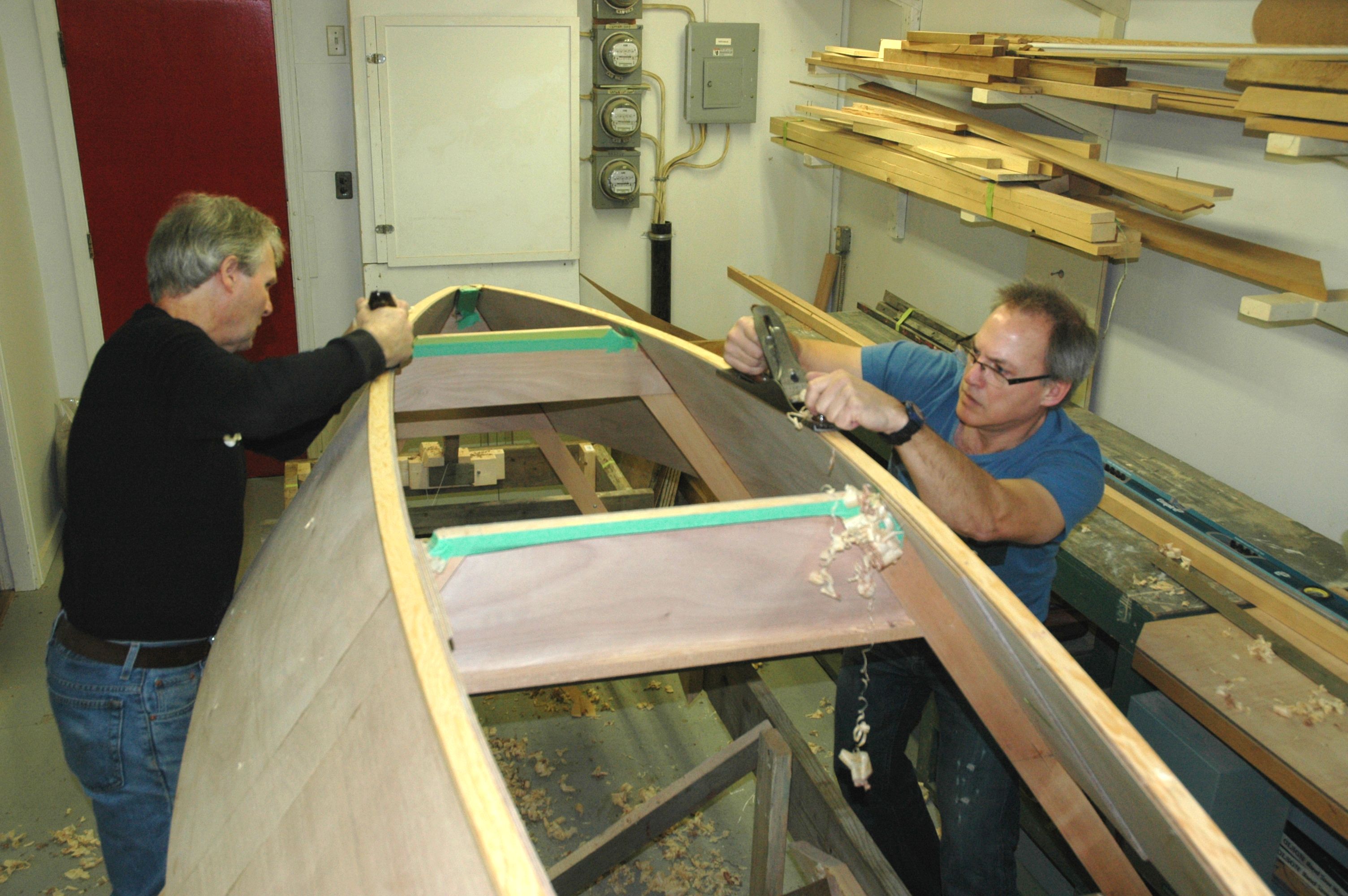
  • Brian (left) and Bob (right) plane the chine logs ready to take the plywood bottom.

After 18 intensive hours we completed the frames and cut, butt-strapped and fitted the hull sides.  The course may have officially ended at this point but that hasn’t stopped Brian and Bob from putting in extra time to get the project completed, and in the process learn some other boat building skills like scarfing plywood for the bottom and using a router to shape the chine logs.

The main challenges came from fairing the frames, stem and stern posts to take the sides. With such a simple dory shape, the concept seems easy enough.  We used a substantial batten sprung across the frames to determine the bevel and then used a combination of planes, draw-knifes and the boat-builders “best friend” – a 5” grinder with a 60 grit disk – to create the bevels.  In practice there’s seemingly endless fitting and trimming otherwise there’s the risk of taking too much off, and we quickly learnt that’s far easier to take stuff off than put it back on!

Part of the learning process is figuring out when a fit is good enough. Sure, we could work towards perfection and although we don’t have serious commercial pressures we still have to keep things moving so that we can clear our limited space for other projects. To borrow a phrase I came across recently, “Perfection is the enemy of The Good.” The “good enough” line between the two will be different for everyone and where you place it ultimately depends on many factors.

We used painter’s tape on all the glue lines to speed clean-up. We used temporary screws, two per frame, to hold the sides in place and these were really important for locating the panels during the gluing. Epoxy with a slow hardener gave us enough time to complete the procedure in a leisurely fashion and would also fill any imperfections caused by over-enthusiastic fairing.

The external chine logs were a little tricky to glue in place because they are bent in 2 directions; we used a combination of clamps and strategically located stainless screws to stop them sliding about. Unfortunately, Gorilla Glue held the screws so well that most of the heads sheared off when trying to remove them, leaving us with permanent fastenings. Next time I would use bronze screws and either pull them out sooner or leave them permanently in place.

Right now, the bottom is about to be glued in place. We plan to sheath it, glue on the gunwales then we will be ready to turn her over. We will let you know how it goes!

The graceful lines of the Bolger designed 15' Gloucester Light Dory (Type V)

By David Skelhon

A rowing dory is a simple, honest boat with enough building challenges for a novice without being over demanding. That’s why we chose the Phil Bolger designed Gloucester Light Dory (Type V) for our beginner’s course as it’s just about as straight forward as it gets.  This model is a “double-ender”, and lacks the traditional dory “tombstone” transom, making construction even easier. Despite its vintage, it’s still a popular boat – no doubt in part due to its reputation for seaworthiness. Just the mention of “Gloucester Light Dory” caused many of our local “salts” eyes to sparkle in recognition.

With five students, we set out to achieve what we could in six, three-hour sessions. Obviously we weren’t going to have a boat on the water at the end of it but with some volunteer input it should be ready for a spring launching.

Victor, our most senior student, has been messing about in boats for years and has built a Bolger dory before.  He is currently building a wee Bolger “”Elegant Punt” as a tender to his sailboat.  The rest of the crew are novices – or at least they were when they started!

I had a couple of weeks head start with the drawings and having built an Iain Oughtred designed Black Fish Dory some 25 years ago as my first boat, I had a good idea how it would go together.

Tobias and Guy started cutting old boards down to size for the strong-back which was a project in itself. It was well done and we shall eventually dismantle it and keep it for the next one.

Bob and Victor started lofting the frames onto a piece of surplus plywood and Brian and I lofted the stem and stern posts. There was a lot of head scratching over the first two sessions; reading drawings is a skill in itself but everyone quickly grasped the principles.  The drawings are beautifully simple and at first sight it appeared improbable that every dimension needed would be there. Of course, from the drawing board of a veteran like Bolger, they were.

One objective was to use Gorilla Glue as much as possible and defer to epoxy whenever we had gaps to fill. Gorilla Glue is very economical to use and because any excess glue that oozes out of the joint rapidly turns to foam, so cleaning up with a chisel or other sharp implement after it has cured is a piece of cake. The boat would be epoxy coated at the end of building to keep it watertight.

We choose 6mm Mahogany marine plywood for the hull sides from our local Windsor Plywood outlet – a very nice 5 ply. To follow the plans and fit plywood seats, 3 sheets are required. We can get the bottom out of one sheet of 9mm ply.

We found enough off-cuts of quarter sawn first-growth Douglas Fir in the basement to make up the frames and purchased a clear 20 ‘ X 4 X 1” Douglas Fir board from Windsor Plywood for the gunwales.

We now have the frames in place and the hull-sides under construction. More details will be posted as the project progresses.

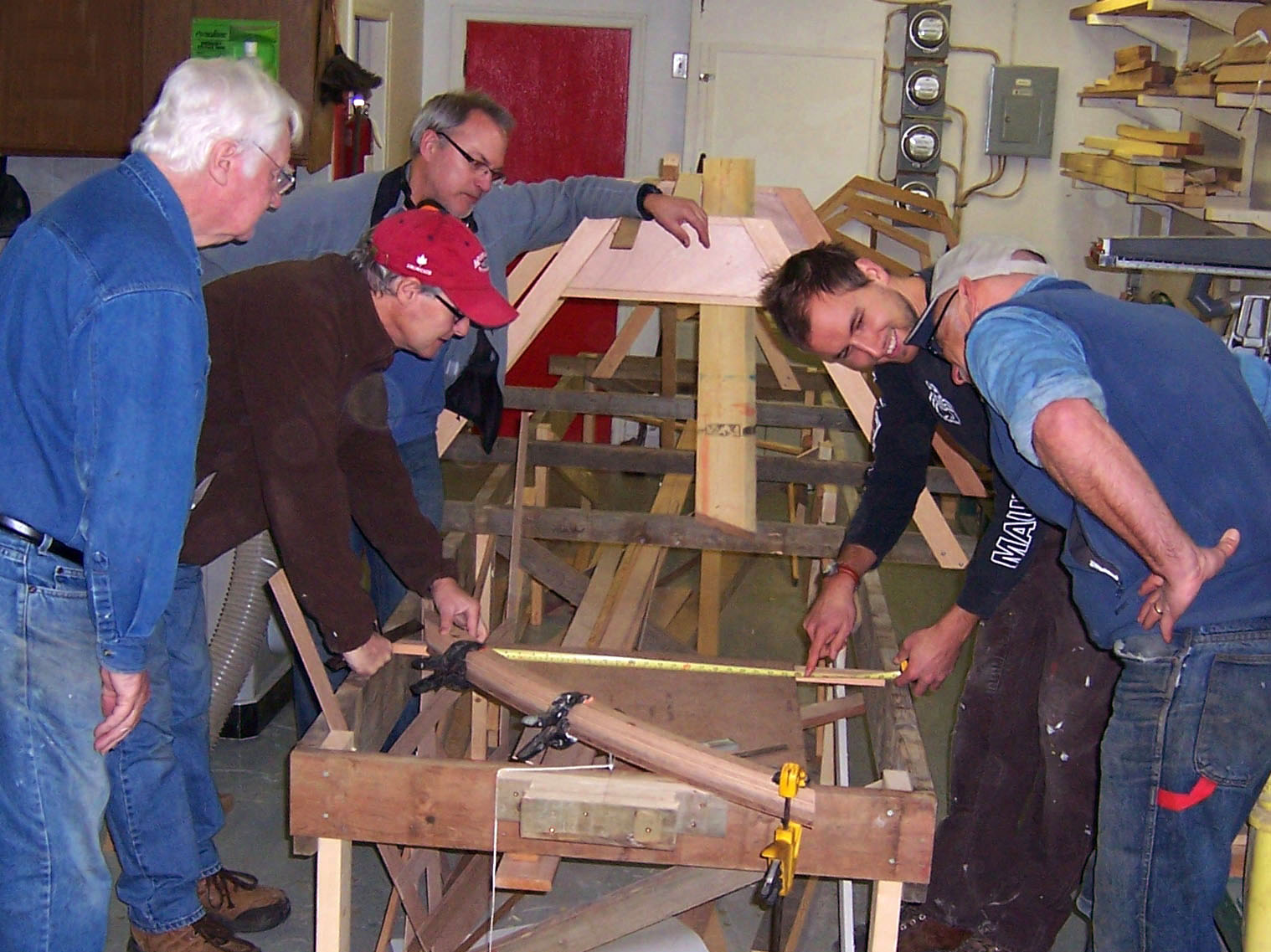
Setting up the stem-post; left to right, Victor, Brian, Bob, Tobias and Guy.