Archive

Tag Archives: British Columbia

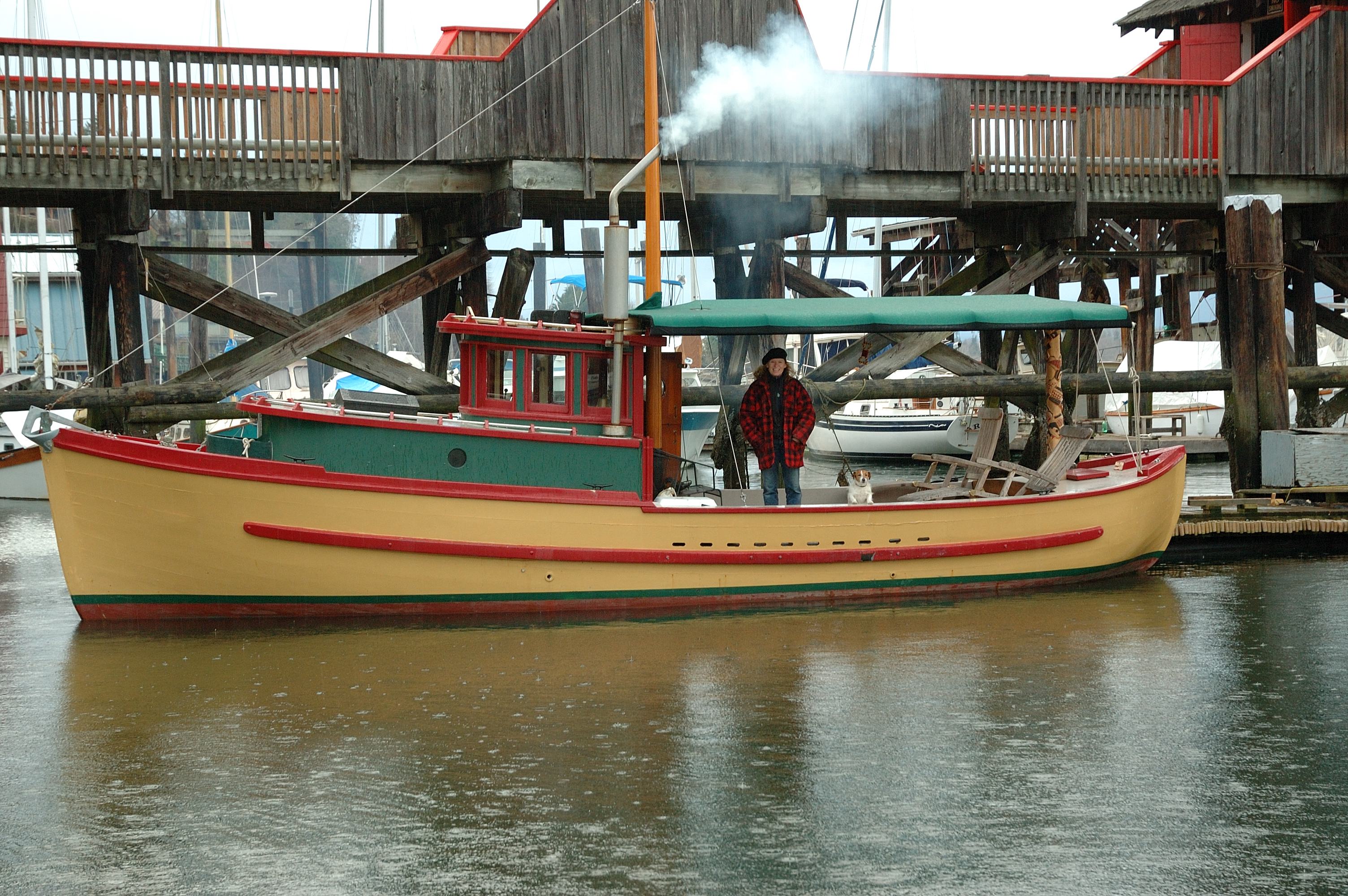
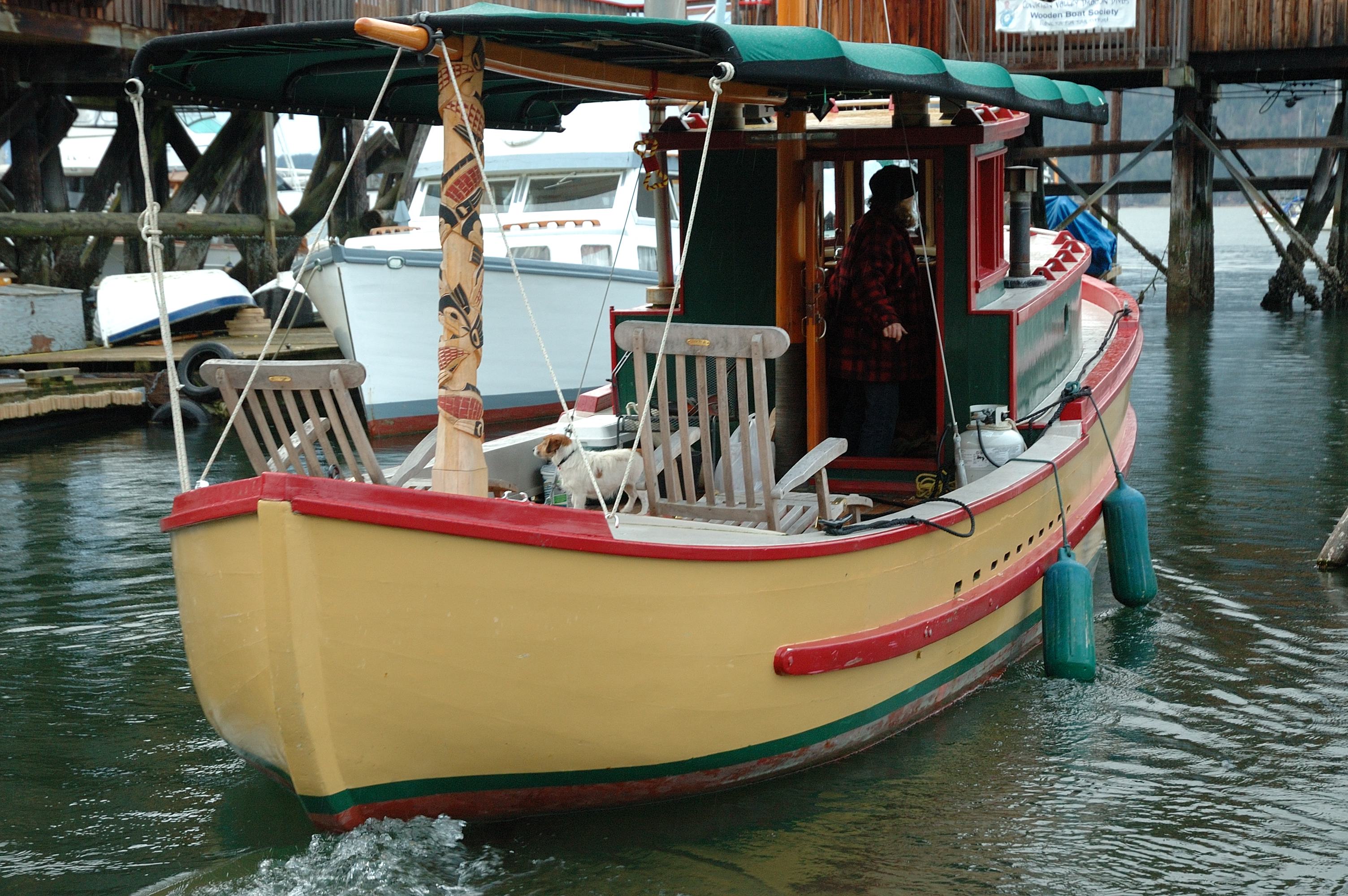
Jan Wylie aboard "Vesta", preparing to depart the Maritime Centre last week.

by David Skelhon

Long-time members of the Maritime Centre may remember “Vesta”, donated to the Centre in 1999 after a long career as a gill netter.

The initial restoration was funded in partnership with Human Resources Canada, as part of a skills training program. She was given new ribs and decks and re-launched in July 2001.Vesta is 32’ long and powered by a 6 cylinder Nissan diesel.  She was used for a time as a “showboat”  by the Maritime Centre, traveling to events along the coast.

Vesta has been owned by local shipwright Jan Wylie for the last 5 years. Wylie said Vesta was built in the ‘50s and used by Jack Jensen and his daughter fishing Porlier Pass between Valdez and Gabriola Islands.

Wylie said she loves the gill netter lines. She considers Vesta a “river boat” and although she has cruised as far north as Princess Luisa Inlet she admits that, after a particularly rough passage, “Thirty-five knots in Georgia Straight was a bit much for a boat of this design!”

Wylie keeps Vesta at Genoa Bay Marina, just across the bay from the Maritime Centre. She has replaced the old steel masts with wooden ones and made an elegant deck awning. She has been busy at the Centre’s workshop this winter making changes to the interior.

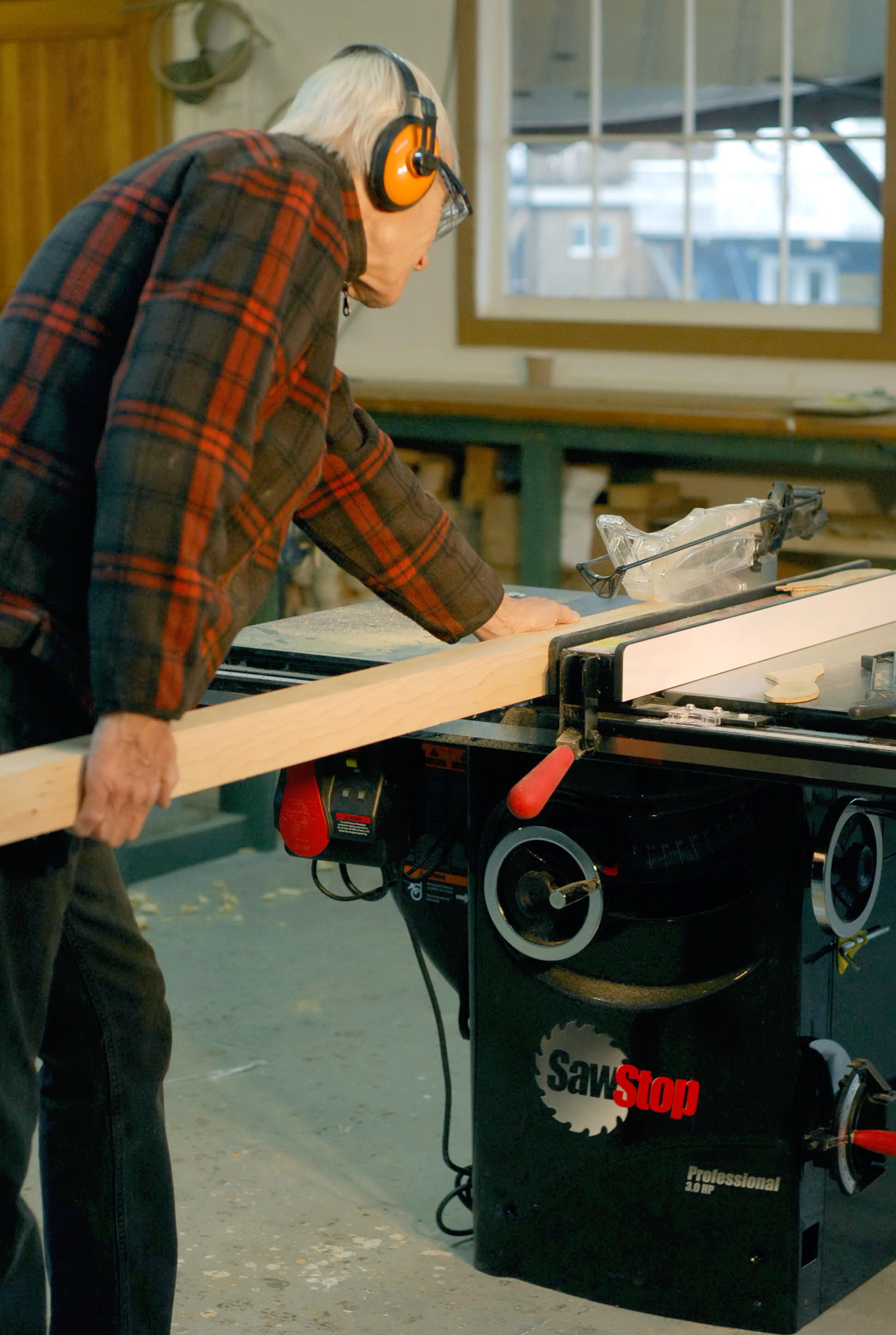
Tony Owen puts some fir through our new saw; SawStop technology helps prevent table saw injuries

We are delighted to announce that we have a new table saw with SawStop technology. This is an important step in improving our member’s safety. We decided it was time to introduce a new “norm” in the way we view safety, especially as we have a wide range of individuals using the shop, from complete novices to seasoned woodworkers.

The table saw is potentially the most dangerous piece of equipment in any woodworking shop and gruesome injuries are not uncommon. There are typically 40 amputations caused by table saws each year in BC alone, plus numerous injuries from “kick-backs.”

WorkSafe BC is quite clear on table saw safety.

“Blade guards on table saws, and to a much lesser degree panel saws, cannot be used in every circumstance. The OHS Regulation allows for the temporary removal of the guard, where its use is impracticable or where the guard itself creates a hazard. The term impracticable means “that which is not reasonably capable of being done.” Impracticable does not mean inconvenient; there should be few situations where it is impracticable to use the guard.

In some cases, however, the guard may physically obstruct the cutting process (for example, when cutting dados or narrow pieces of material). In these cases, the guard may be temporarily removed, but another safety device (or devices) must be used, such as a push stick, push block, feather board, or similar device. Note that the operator’s hands are not an acceptable alternative to a push stick, push block, or similar device. Replace the guard once that cutting operation is completed.”

Returning to kick-backs, consider that the tips of a 10” blade are travelling at around 220kph, and if the blade happens to catch a piece of lumber because you are not using a riving knife, or a guard with anti kick-back pawls, then that piece of lumber is likely to end up heading towards you at 220 kph! I have seen a sliver of lumber narrowly miss a saw operator and then penetrate 2 layers of drywall!

Before using the saw please ask me to show you how the SawStop feature works – important as accidental activations are expensive! I recommend looking at the http://sawstop.com where there is an impressive video on their home page of the technology in action. Basically, if any part of your body makes contact with the blade, an aluminum block is fired into the bottom of the blade, stopping it instantly and retracting it into the table; this all happens in a few milliseconds! You will also find the excellent manual for our Professional Cabinet Saw model at http://www.sawstop.com/support/professional-cabinet-saw/

A hard copy of the manual can be found in the rack just inside the tool room door, together with manuals for the other shop machines. Read it and you will learn a few things – I certainly did. Remember that even SawStop technology won’t protect you from kick-backs if you remove the guards!

The saw was assembled with Collin Craig’s help and we were both very impressed by the build quality of this machine and we are sure you will all find it a pleasure to use.

We have some quality equipment in the shop for member’s use. There are still things we need to improve, and a few more tools that we would like to have (aren’t there always!) and those will come in good time.
  • Beginner’s Course Ends But Work Continues On The Bolger Designed Goucester Light Dory

  • By David Skelhon
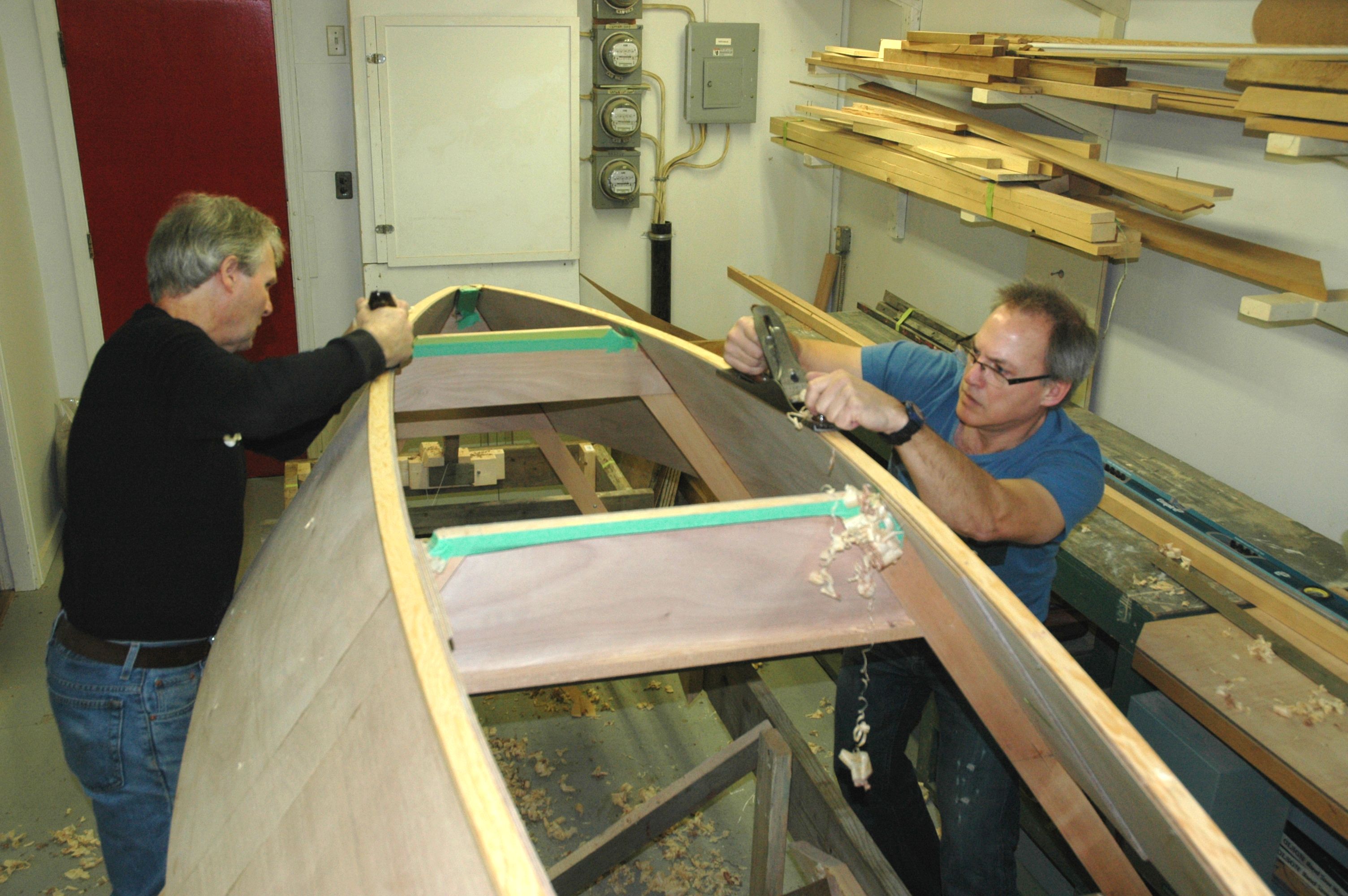
  • Brian (left) and Bob (right) plane the chine logs ready to take the plywood bottom.

After 18 intensive hours we completed the frames and cut, butt-strapped and fitted the hull sides.  The course may have officially ended at this point but that hasn’t stopped Brian and Bob from putting in extra time to get the project completed, and in the process learn some other boat building skills like scarfing plywood for the bottom and using a router to shape the chine logs.

The main challenges came from fairing the frames, stem and stern posts to take the sides. With such a simple dory shape, the concept seems easy enough.  We used a substantial batten sprung across the frames to determine the bevel and then used a combination of planes, draw-knifes and the boat-builders “best friend” – a 5” grinder with a 60 grit disk – to create the bevels.  In practice there’s seemingly endless fitting and trimming otherwise there’s the risk of taking too much off, and we quickly learnt that’s far easier to take stuff off than put it back on!

Part of the learning process is figuring out when a fit is good enough. Sure, we could work towards perfection and although we don’t have serious commercial pressures we still have to keep things moving so that we can clear our limited space for other projects. To borrow a phrase I came across recently, “Perfection is the enemy of The Good.” The “good enough” line between the two will be different for everyone and where you place it ultimately depends on many factors.

We used painter’s tape on all the glue lines to speed clean-up. We used temporary screws, two per frame, to hold the sides in place and these were really important for locating the panels during the gluing. Epoxy with a slow hardener gave us enough time to complete the procedure in a leisurely fashion and would also fill any imperfections caused by over-enthusiastic fairing.

The external chine logs were a little tricky to glue in place because they are bent in 2 directions; we used a combination of clamps and strategically located stainless screws to stop them sliding about. Unfortunately, Gorilla Glue held the screws so well that most of the heads sheared off when trying to remove them, leaving us with permanent fastenings. Next time I would use bronze screws and either pull them out sooner or leave them permanently in place.

Right now, the bottom is about to be glued in place. We plan to sheath it, glue on the gunwales then we will be ready to turn her over. We will let you know how it goes!