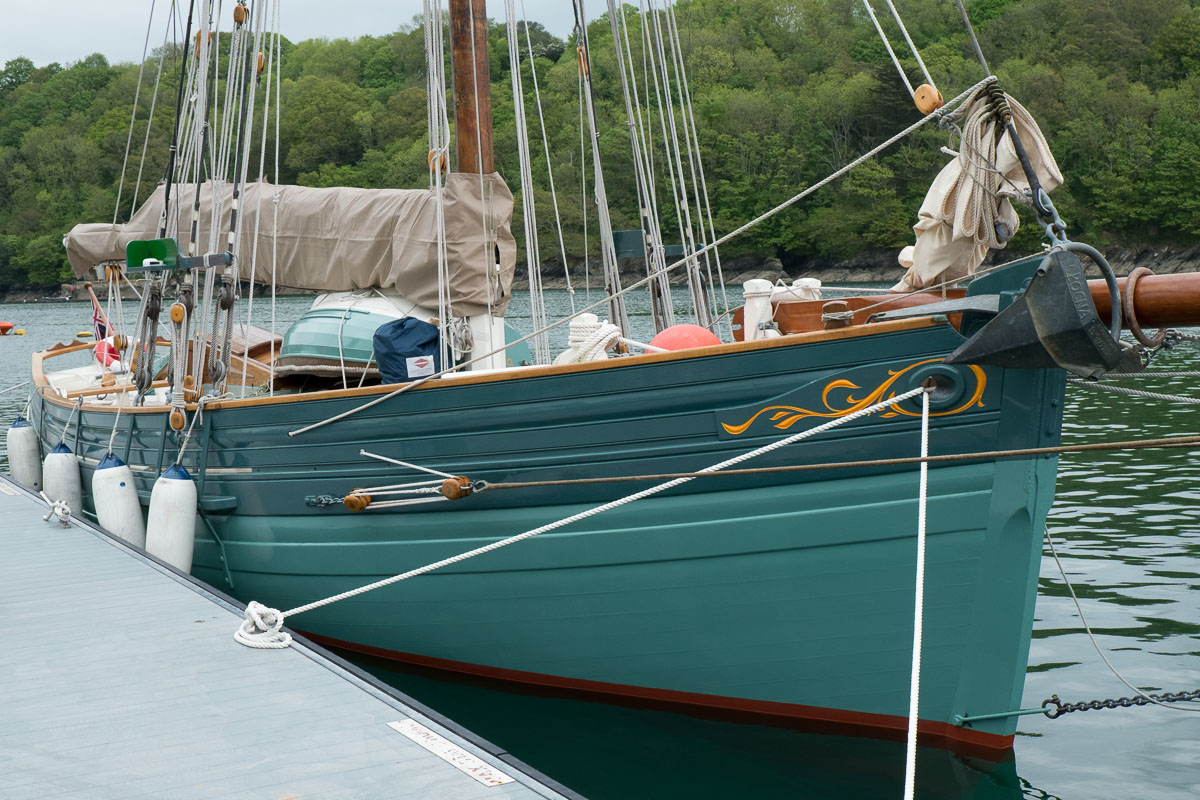
During a recent visit to the Fowey, Cornwall – the south western peninsular of the UK – I came across this gorgeous cutter. Unfortunately I don’t have any details (no name visible from the dock) and no one was available for comment. Maybe someone out there knows more..? It took my breath away!

Seen in Fowey, UK, May 2015

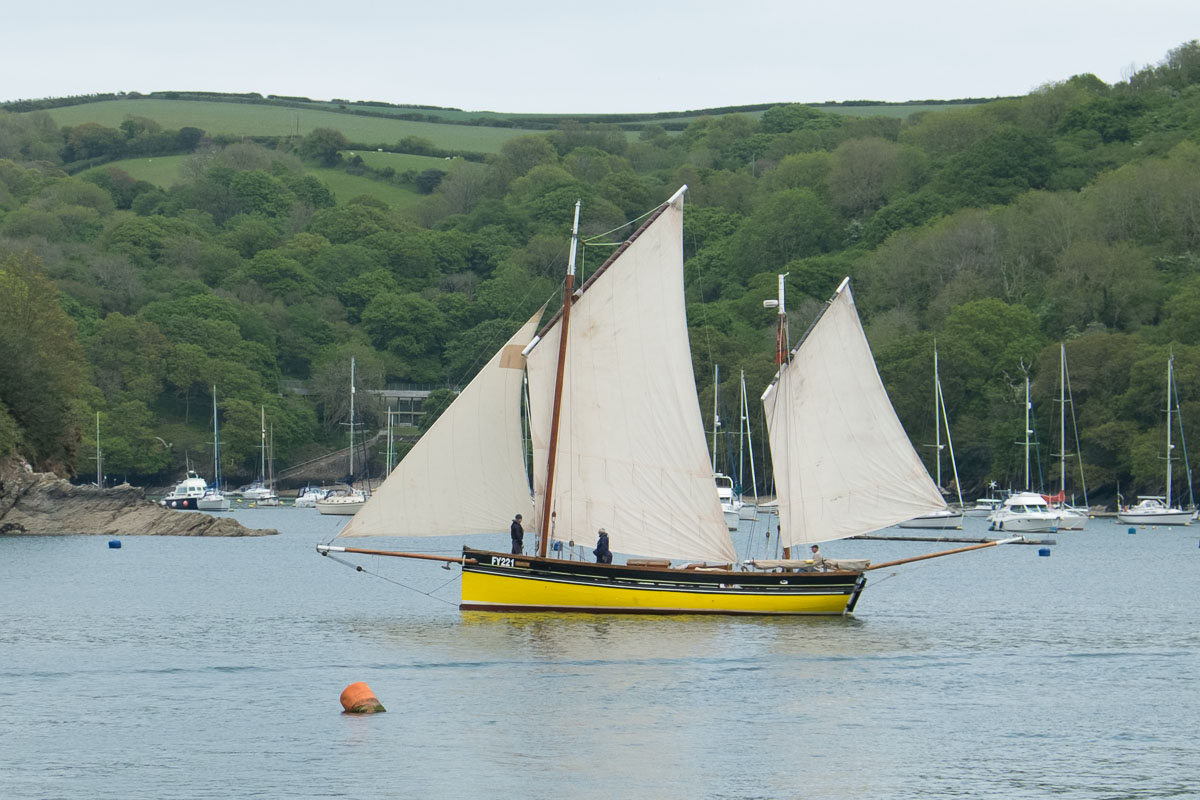
Seen in Fowey, UK, May 2015

UK2015-161

UK2015-158

Also seen entering the harbour – a restored working boat no doubt.

UK2015-151

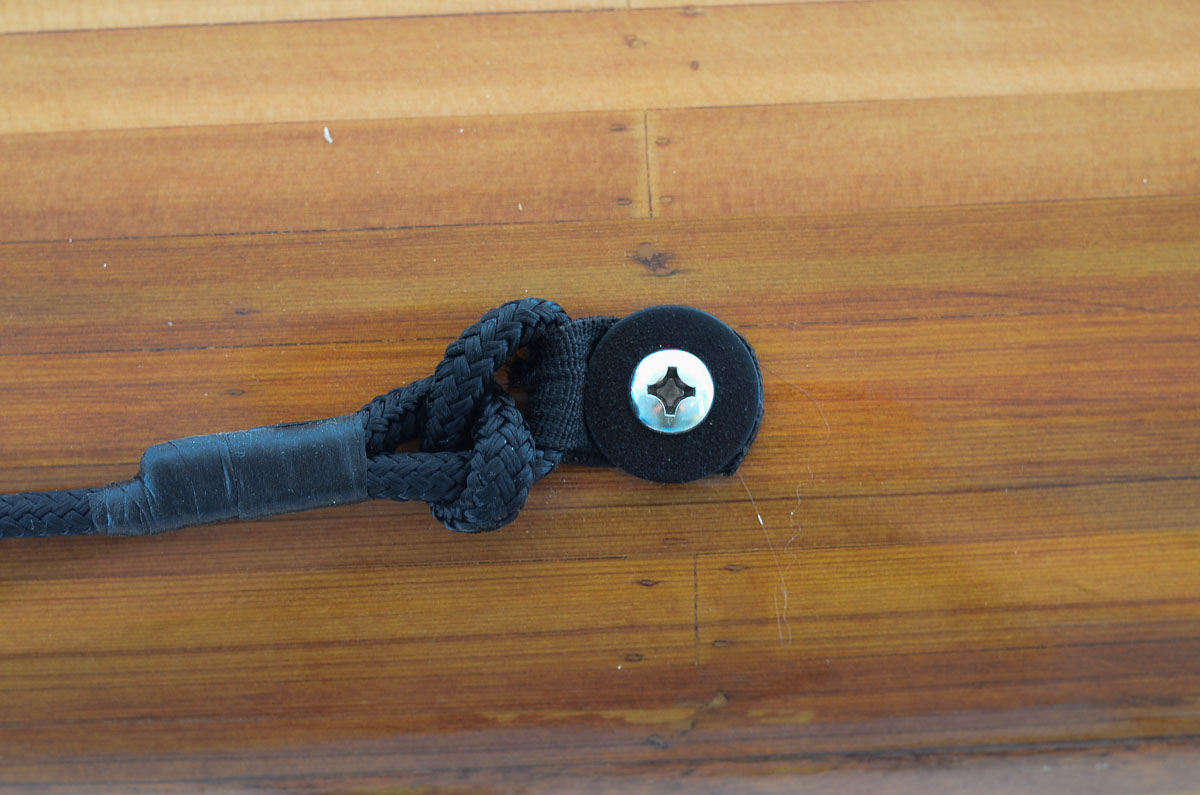
After searching unsuccessfully for inexpensive deck fittings I decided to make my own. I came up with a very simple and workable solution using stainless-steel, pan-head machine screws and large “fender” washers. The washer on the outer skin traps a loop of ¾” webbing which in turn is threaded with ¼” Dacron deck line.

These two fittings secure the deck line and the hatches.

These two fittings secure the deck line and the hatches.

I used the tip of a soldering iron to melt a hole in the webbing to take a machine screw and also seal the edges of the cut webbing. The stainless washers were scuffed up with 400 grit wet&dry paper, degreased then sprayed with black enamel. I’m very pleased with the overall effect, which goes well with the black carbon-fibre cockpit coaming.

To reduce the possibility of the webbing unraveling under stress I used “Marine Goop” to glue the folded webbing together and also to prevent water penetration down the screw threads.

I used thickened epoxy to fill voids under the washer inside the hull – the hull has some curvature of course and I didn’t want to crush the structure. The screws were secured with Nyloc nuts.

I think the end result looks smart and it has certainly performed well so far.

Deck line termination

Deck line termination

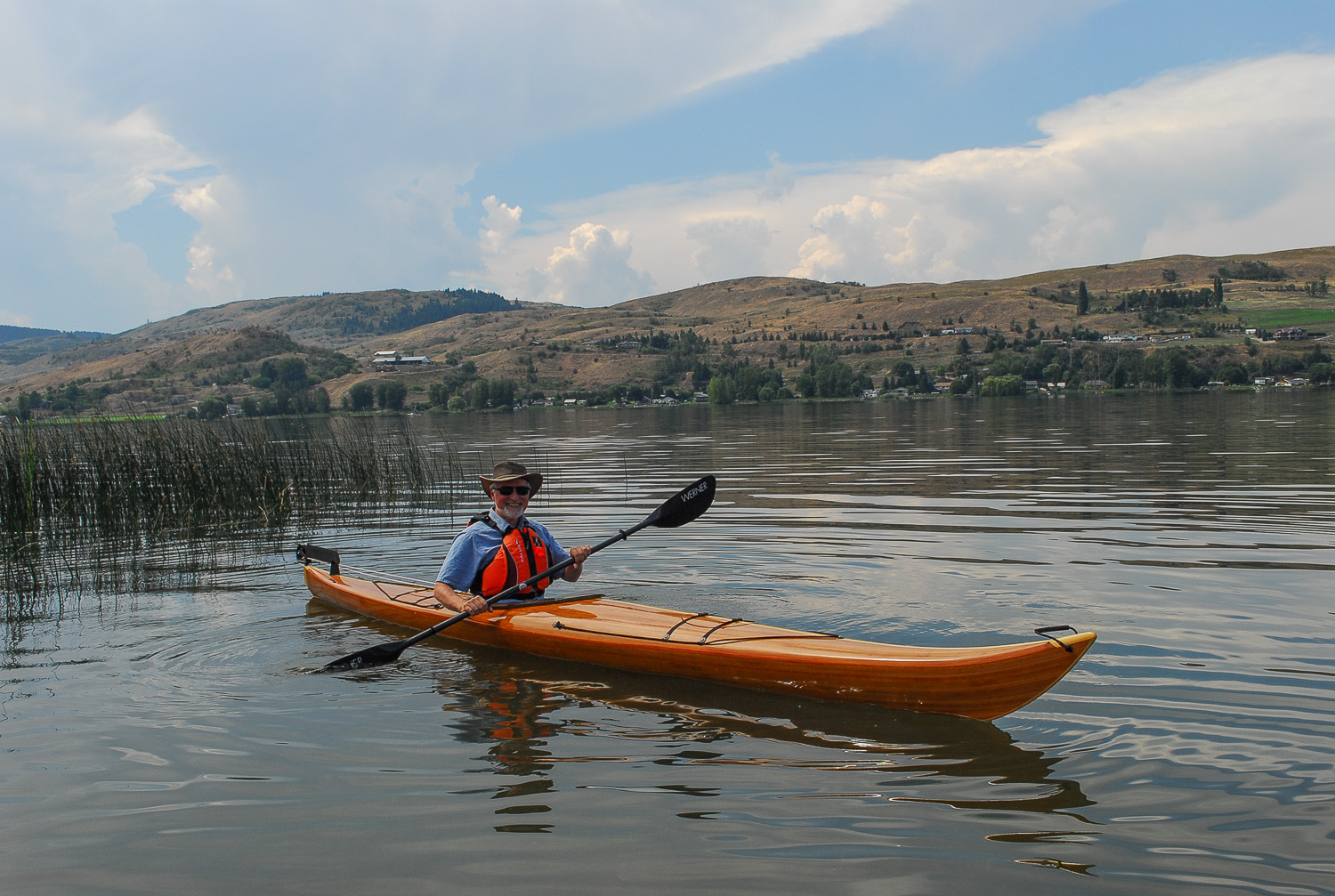
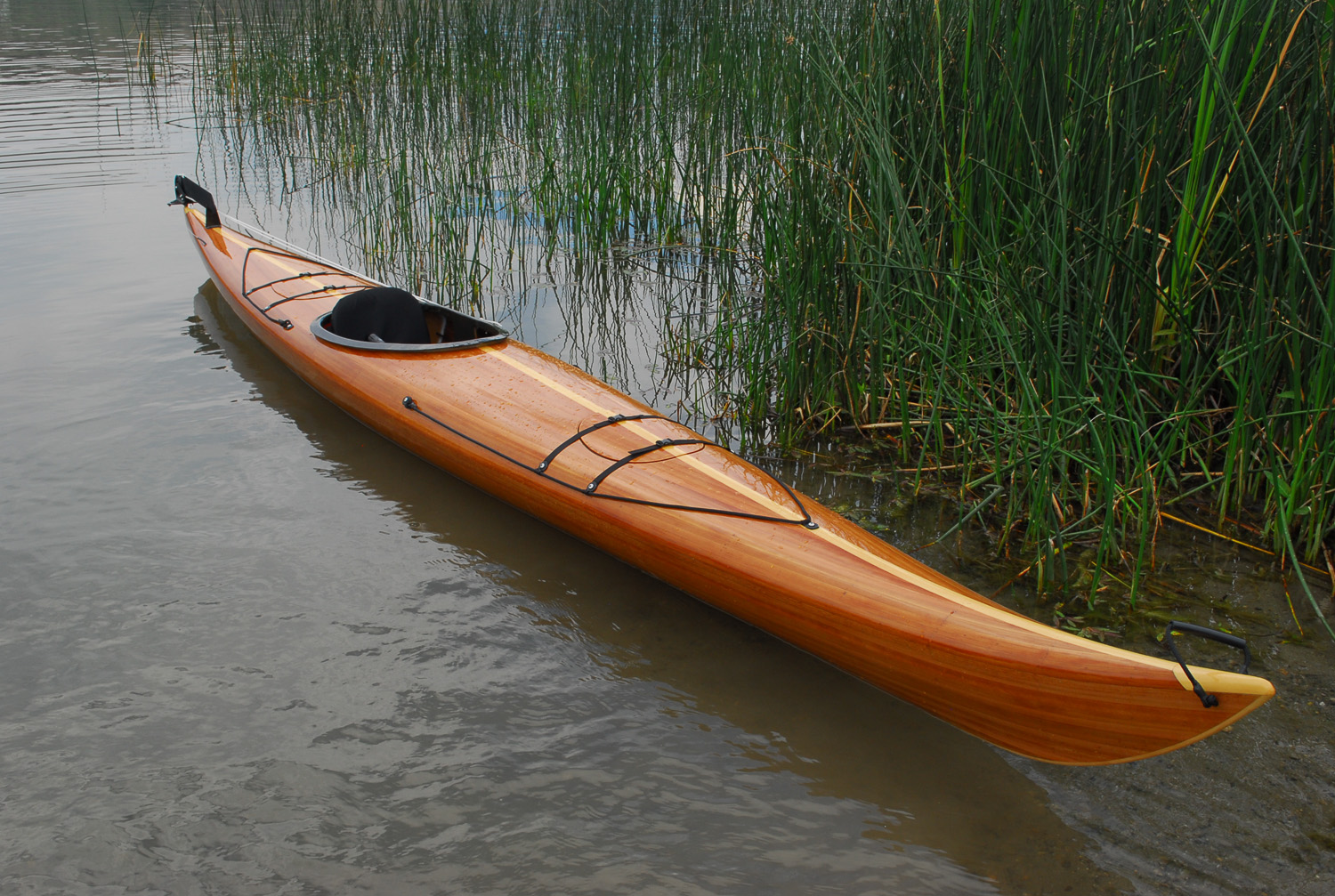
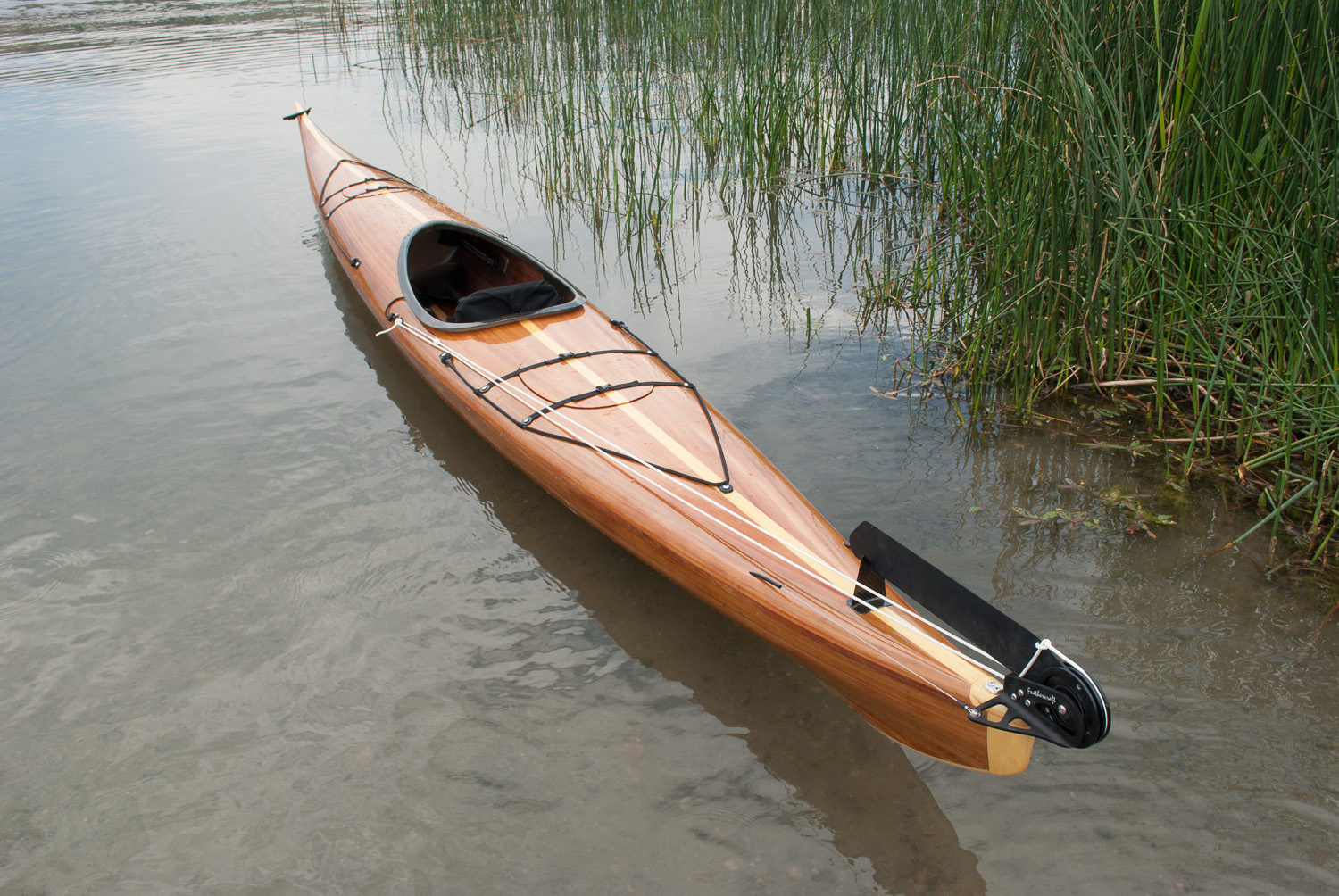
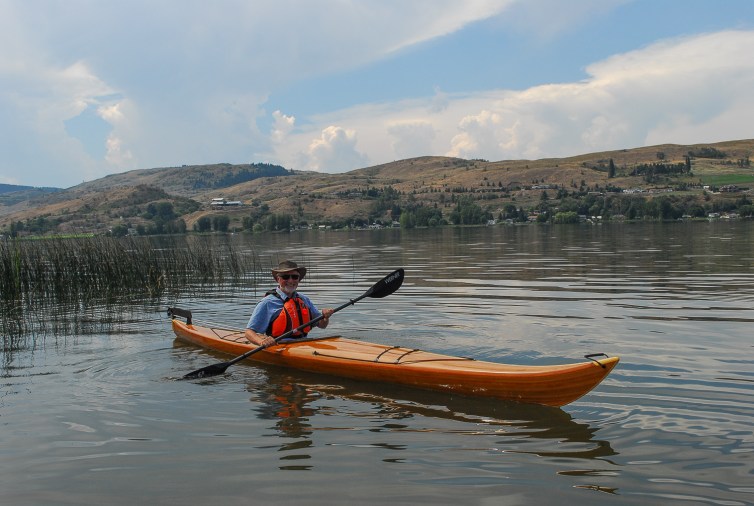
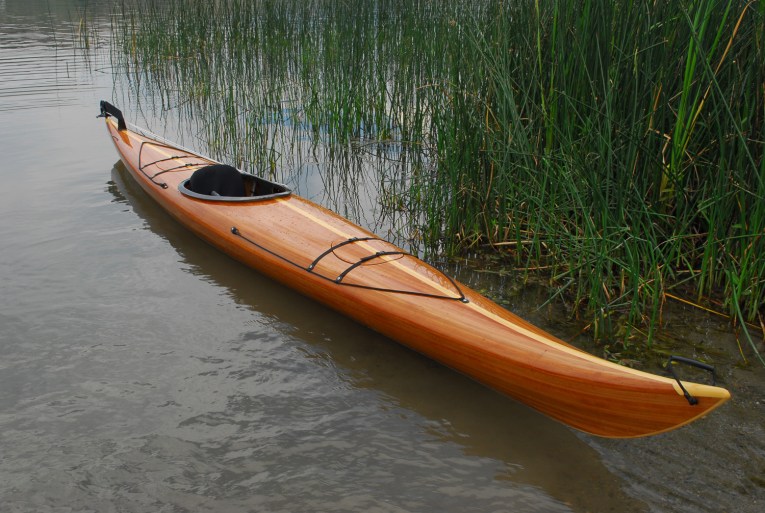
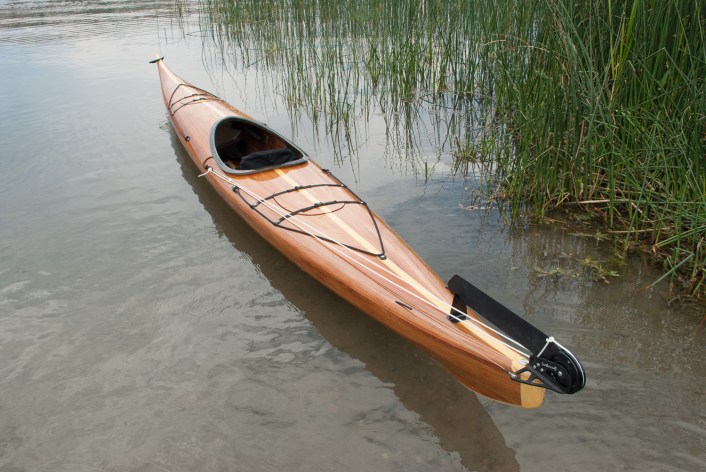
The author's freshly finished kayak on Swan Lake, Vernon, BC.

The author’s freshly finished kayak on Swan Lake, Vernon, BC.

After some 400 hours of pleasurable work, I launched my kayak on August 3rd. I’m very happy to report that my new boat meets all of my expectations. She is fast and capable and when I get back to the ocean I’m sure she will also pack a good expedition load.

Rainbird, the 33’ wooden Bill Garden sloop which had been in my life for 5 years was sold at the end of June. As my home is in the BC Okanagan, keeping a boat on Vancouver Island was becoming a strain. Getting there involved a 550km road trip and an expensive 2 hour ferry ride – typically 11 hours door to dock. I was also spending way more time on maintenance than sailing. Besides, Rainbird was as much Jilly’s boat as mine and after she passed away in 2012 my whole world changed.

I certainly haven’t lost my love for sailing and wooden sailboats, but it’s time to try something different, especially as the cost of keeping a boat on BC’s coast makes it tough for budget conscious sailors.

I will continue posting kayak building tips. The process wasn’t difficult but then I have 30 years of building experience to draw on. Hopefully I can help new builders save themselves a little time and money.

Finally I would like to thank Vaclav Stejskal of One Ocean Designs for his beautiful Storm LT design and excellent plans and manuals. Armed with these you can’t go wrong and my comments are only intended to show other slightly different ways of achieving the same ends with the tools, materials and experience you have at hand.
Kayak Launch-0017

Kayak Launch-0023