-
Beginner’s Course Ends But Work Continues On The Bolger Designed Goucester Light Dory
-
By David Skelhon
-
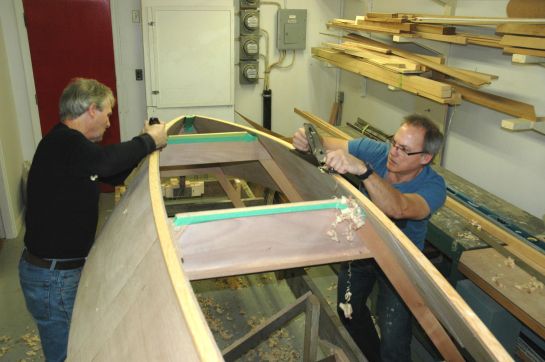
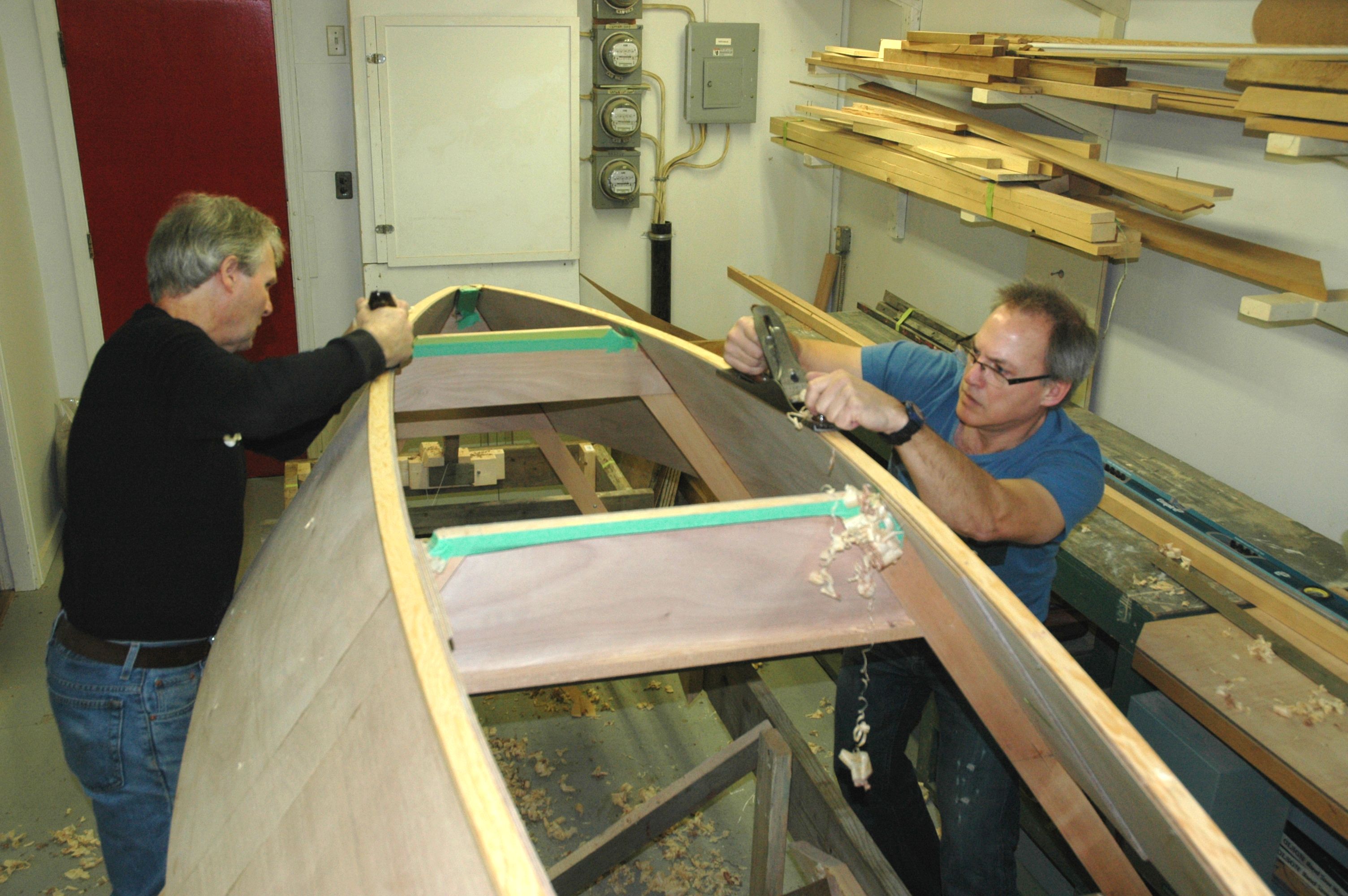
Brian (left) and Bob (right) plane the chine logs ready to take the plywood bottom.
After 18 intensive hours we completed the frames and cut, butt-strapped and fitted the hull sides. The course may have officially ended at this point but that hasn’t stopped Brian and Bob from putting in extra time to get the project completed, and in the process learn some other boat building skills like scarfing plywood for the bottom and using a router to shape the chine logs.
The main challenges came from fairing the frames, stem and stern posts to take the sides. With such a simple dory shape, the concept seems easy enough. We used a substantial batten sprung across the frames to determine the bevel and then used a combination of planes, draw-knifes and the boat-builders “best friend” – a 5” grinder with a 60 grit disk – to create the bevels. In practice there’s seemingly endless fitting and trimming otherwise there’s the risk of taking too much off, and we quickly learnt that’s far easier to take stuff off than put it back on!
Part of the learning process is figuring out when a fit is good enough. Sure, we could work towards perfection and although we don’t have serious commercial pressures we still have to keep things moving so that we can clear our limited space for other projects. To borrow a phrase I came across recently, “Perfection is the enemy of The Good.” The “good enough” line between the two will be different for everyone and where you place it ultimately depends on many factors.
We used painter’s tape on all the glue lines to speed clean-up. We used temporary screws, two per frame, to hold the sides in place and these were really important for locating the panels during the gluing. Epoxy with a slow hardener gave us enough time to complete the procedure in a leisurely fashion and would also fill any imperfections caused by over-enthusiastic fairing.
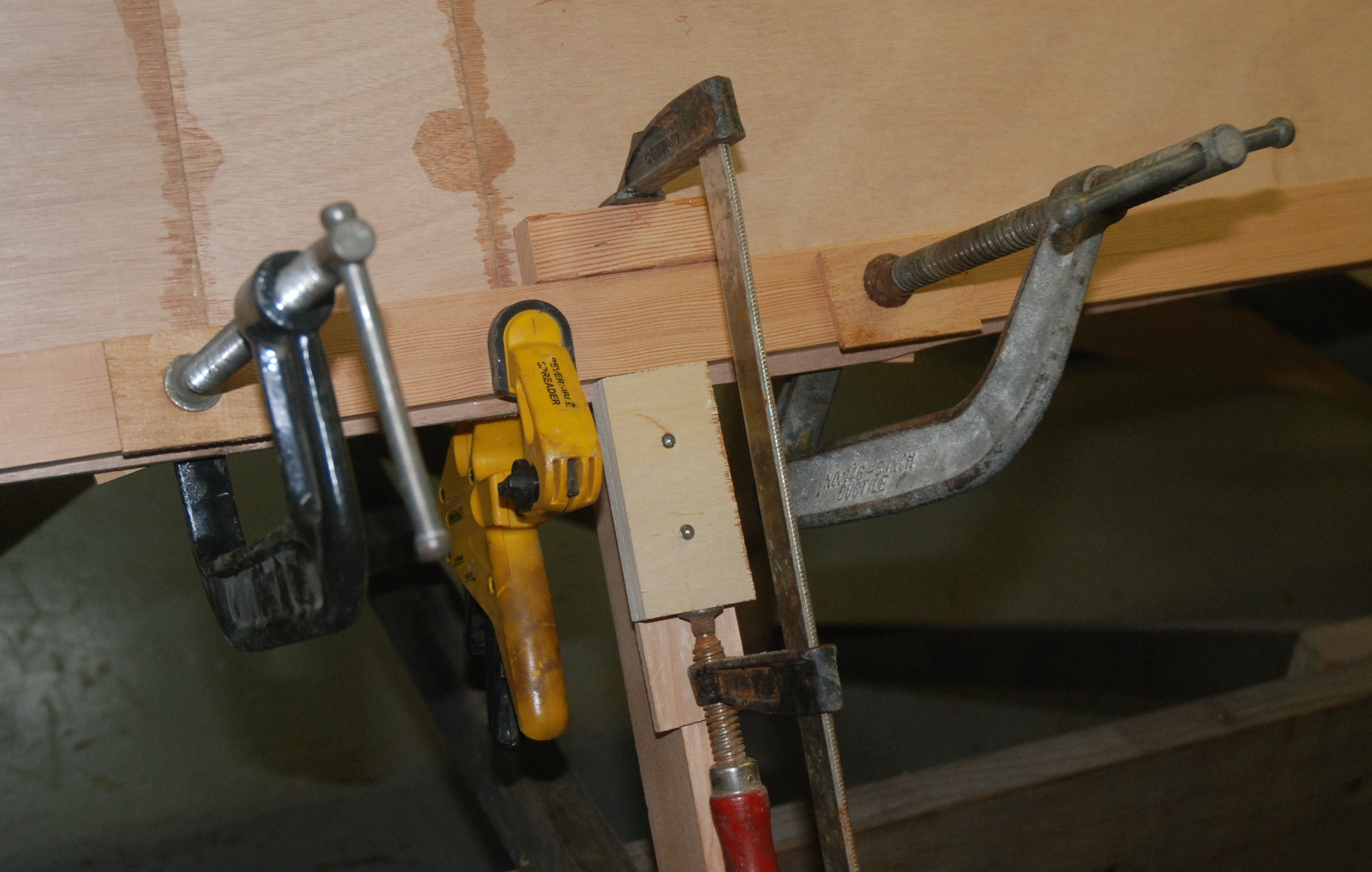
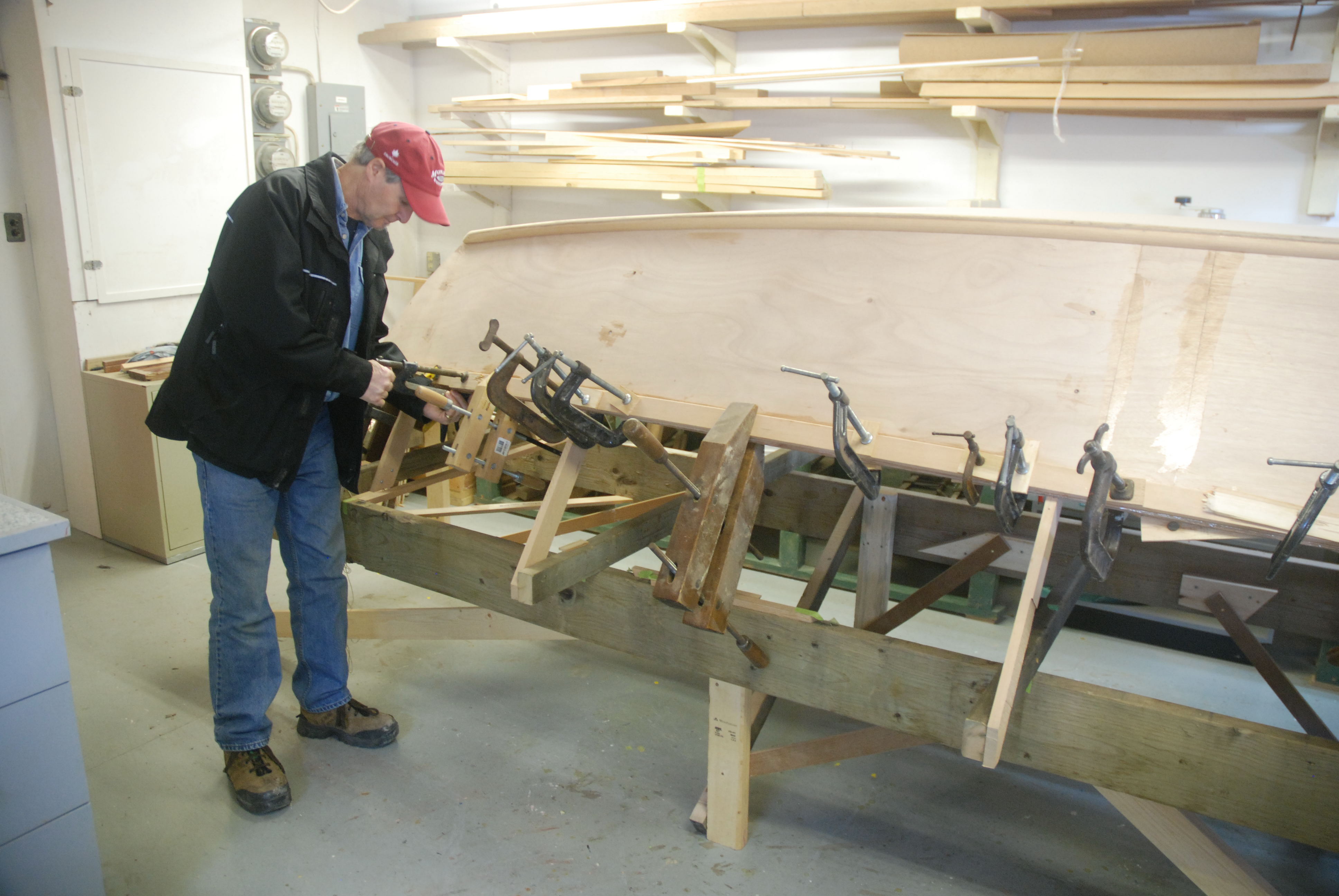
The external chine logs were a little tricky to glue in place because they are bent in 2 directions; we used a combination of clamps and strategically located stainless screws to stop them sliding about. Unfortunately, Gorilla Glue held the screws so well that most of the heads sheared off when trying to remove them, leaving us with permanent fastenings. Next time I would use bronze screws and either pull them out sooner or leave them permanently in place.
Right now, the bottom is about to be glued in place. We plan to sheath it, glue on the gunwales then we will be ready to turn her over. We will let you know how it goes!
 Pacific Wooden Boats